What Are the Types of 18-Wheeler Accidents?

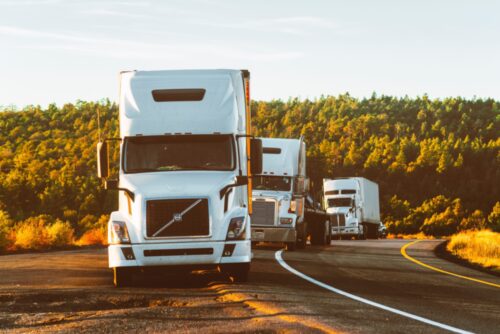
trucks on road

18-Wheelers, though integral to the economy of our nation, can be incredibly dangerous. When combining the immense size and weight of these vehicles with the unique nature of accidents that can happen, like jackknifes, underrides, and rollovers, these collisions are often far more dangerous than accidents involving standard-sized vehicles. As such, understanding the cause of these collisions, as well as how to proceed if you are involved in a collision with a semi-truck, is essential to protecting your health and your legal claim.

Why 18-Wheeler Accidents Are More Dangerous Than Passenger Vehicle Crashes

A standard passenger vehicle is no match for an 18-wheeler truck. This is because these trucks, if fully loaded, can weigh approximately 80,000 pounds. This is generally 20 to 30 times heavier than a passenger vehicle, so when a collision occurs, the aftermath can be devastating. Because of these factors, 18-wheeler accidents often result in more severe injuries, higher fatality rates, and more complicated liability claims than standard collisions.

Key Risk Factors Unique to Trucks

  • Trucks require significantly longer stopping distances, which increases the risk of a rear-end collision
  • Commercial trucks have a higher center of gravity, increasing the likelihood of rollover accidents when taking sharp turns
  • Large blind spots increase the risk of side-impact collisions
  • Cargo loading can destabilize trucks, especially in bad weather

What Types Of 18-Wheeler Accidents Occur in the State of New Jersey?

In New Jersey, understanding the different types of 18-wheeler accidents is essential for identifying liability and protecting your right to compensation after the collision.

Notably, the types of 18-wheeler accidents are not typically seen with standard passenger vehicles. In fact, they have more of a chance of being fatal. In Morris County, both Interstates 80 and 287, which serve as primary routes for many commercial vehicles, the risk of a collision in and around the area increases.

Common Types of Truck Accidents

  • Rollover or tip-over accidents: This occurs when a truck driver makes a turn too sharply, is unevenly loaded, or encounters severe weather conditions (i.e., icy roads)
  • Jackknife accidents: This occurs when a truck driver brakes suddenly, which causes the trailer to swing and swipe another vehicle
  • Underride accidents: This occurs when another driver rear-ends a truck and gets stuck under its trailer
  • Head-on collisions: This occurs when a truck driver is driving the wrong way on a one-way road or driving on the wrong side of the road
  • Rear-end accidents: This occurs when a truck driver crashes into the back of another vehicle
  • Wide-turn accidents: This occurs when a truck takes a wide turn, ultimately trapping cars between the trailer and the curb
  • Cargo spill accidents: This occurs when a truck’s cargo is improperly secured, causing it to spill onto the roadway, creating sudden and dangerous hazards

What Should You Do After an 18-Wheeler Accident in New Jersey?

In the unfortunate event that you are made a victim of an 18-wheeler accident in Morristown, Madison, Denville, or any other Morris County community, then you must do everything in your power to fight for the financial compensation that you rightfully deserve and, overall, hold the negligent truck driver accountable. This can be accomplished by filing a personal injury claim.

Immediate Steps to Protect Your Health and Legal Claim

  1. Call 911: a law enforcement officer will arrive on the scene, dispatch an ambulance, and conduct an official police report. You should get a copy of the report afterward.
  2. Document the scene: capture photos and videos of your injuries, your damages, and any hazards that had a hand in your accident. You should collect photos and videos taken by witnesses afterward.
  3. Collect contact information: request that the truck driver share their name, phone number, commercial driver’s license number, employer’s name, etc. You should collect the information of witnesses afterward.
  4. Seek medical treatment: attend the ambulance on the scene, along with follow-up appointments with your physician. You should collect the medical documents that include the date, time, and type of injuries you received, along with your medical bills.
  5. Hire a competent Parsippany, New Jersey personal injury lawyer: you should get started on your case before New Jersey’s statute of limitations, which is generally two years from the date of your accident.

Who Can Face Liability for a New Jersey Truck Accident?

Truck accident claims may involve multiple parties beyond the driver operating the vehicle at the time of the collision. As such, determining liability is essential for maximizing your compensation in accordance with New Jersey law.

Potentially Liable Parties

  • The truck driver
  • The trucking or logistics company that employs the driver
  • The company responsible for loading the cargo
  • The vehicle’s manufacturer
  • Maintenance companies or mechanics who performed negligent repairs

Contact an Experienced Morris County Personal Injury Firm Today

In the event you are involved in a collision with a large commercial vehicle due to the negligent actions of the driver, their employer, or a third party, it’s imperative to understand your right to seek compensation for the damages you have sustained. As such, working with the dedicated team at the Macri Law Group is in your best interest. Our firm regularly and proudly represents clients injured in trucking accidents throughout Morristown, Madison, Parsippany, and the surrounding New Jersey communities. We understand how difficult these matters can be to navigate, which is why we will do everything in our power to help you recover the compensation you deserve. Contact us today to learn more.